
A producer with ten episodes to localize and a six-week deadline faces an unavoidable question: how much does dubbing cost for a TV series, a feature film or a documentary? There is no single answer. The final number depends on a mix of concrete variables — episode count, cast size, sync type, delivery schedule — and each project combines them differently. Understanding what drives the budget is the first step toward building a realistic one.
The Italian Example: the National Dubbing Contract and the Cost Structure
Dubbing in Italy is one of the few audiovisual sectors governed by a national collective bargaining agreement. The CCNL signed in December 2023, effective from 2024, sets minimum rates for every role involved: voice actors, dubbing directors, assistants, and dialogue adapters. Costs are not calculated as flat packages — they are built from precise units: the recording session (three hours) and the script line (fifty characters, spaces included).
Rates vary by product tier — theatrical films and animated features fall under Tier A, TV series under Tier B, documentaries and soap operas under Tier C — and each role carries its own per-session and per-unit fee. The dialogue adapter, who rewrites the script to match lip movements, is paid per minute of footage. Full details are available in the official collective agreement.
These are contractual minimums. High-profile voice talent or recognizable cast names are negotiated on a case-by-case basis. What many clients don’t realize is that the number of speaking characters — not just runtime — is what pushes the budget up most significantly.
How Much Does Dubbing Cost Based on Volume and Voice Cast
The weight of episode count and total line volume
A single 45-minute drama episode can contain several hundred lines of dialogue. Scaling that across a full season, the total volume becomes substantial, spread over dozens of recording sessions.
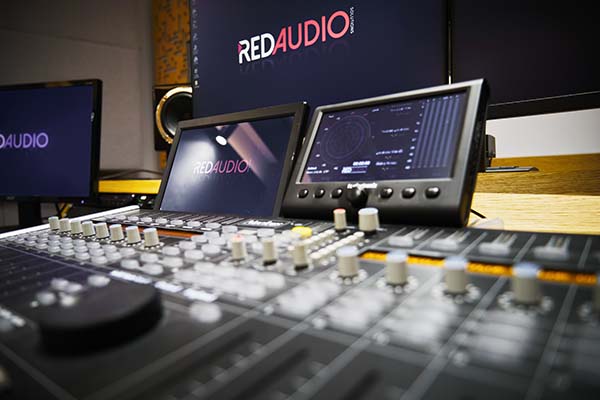
The math is straightforward: more lines across more actors means more sessions, more attendance fees, more studio days.
Cast size is the variable that matters most. A series with four leads and ten supporting roles requires a voice cast of at least fifteen actors. An ensemble show with twenty or thirty speaking characters per episode can double the number of sessions needed and push the cost well beyond initial expectations.
For anyone evaluating the localization of a series, a film, a documentary or an animated production, working directly with the audio post-production studio makes it possible to turn these numbers into a concrete quote, built on actual material rather than generic estimates. At RED Audio we regularly handle series ranging from 8 to 40 episodes for platforms like Netflix and Prime Video, and every project carries a different cost structure — because every project is different. Those looking to explore further can get in touch directly for an assessment of their specific project.
How Much Does Dubbing Cost Under Tight Deadlines and Lip-Sync
Tight deadlines cost money. Compressing a workflow that normally takes weeks into a matter of days means scheduling extra sessions, coordinating multiple studios in parallel, and managing voice talent on aggressive timelines. The contract includes surcharges for overtime and holiday work, and these have a direct impact on the final total.
The type of sync also makes a difference. Lip-sync dubbing — where the dubbed voice must follow the original actor’s mouth movements — requires longer adaptation and recording times compared to voice-over or free sync. A live-action series or film with frequent close-ups is more expensive to dub than an animation or a voice-over documentary. The final cost can vary enormously from project to project, and only a quote built on the actual material can provide a reliable estimate.
How to Request a Realistic Quote
No online price list can accurately answer the question “how much does dubbing cost” for a specific project. What truly makes the difference is approaching the studio with the right information: number of episodes and runtime, source language, scripts (even provisional ones), delivery deadline, and an idea of how many speaking characters are involved.
For anyone with a project in the planning stage or comparing options for the localization of a film, a TV series or animated content, the most useful step is to talk to the people who manage these workflows every day. RED Audio Solutions works with international productions of every scale — from limited series to catalogues of hundreds of episodes — and the team is available to build a detailed quote that accounts for timelines, budget and creative goals.